
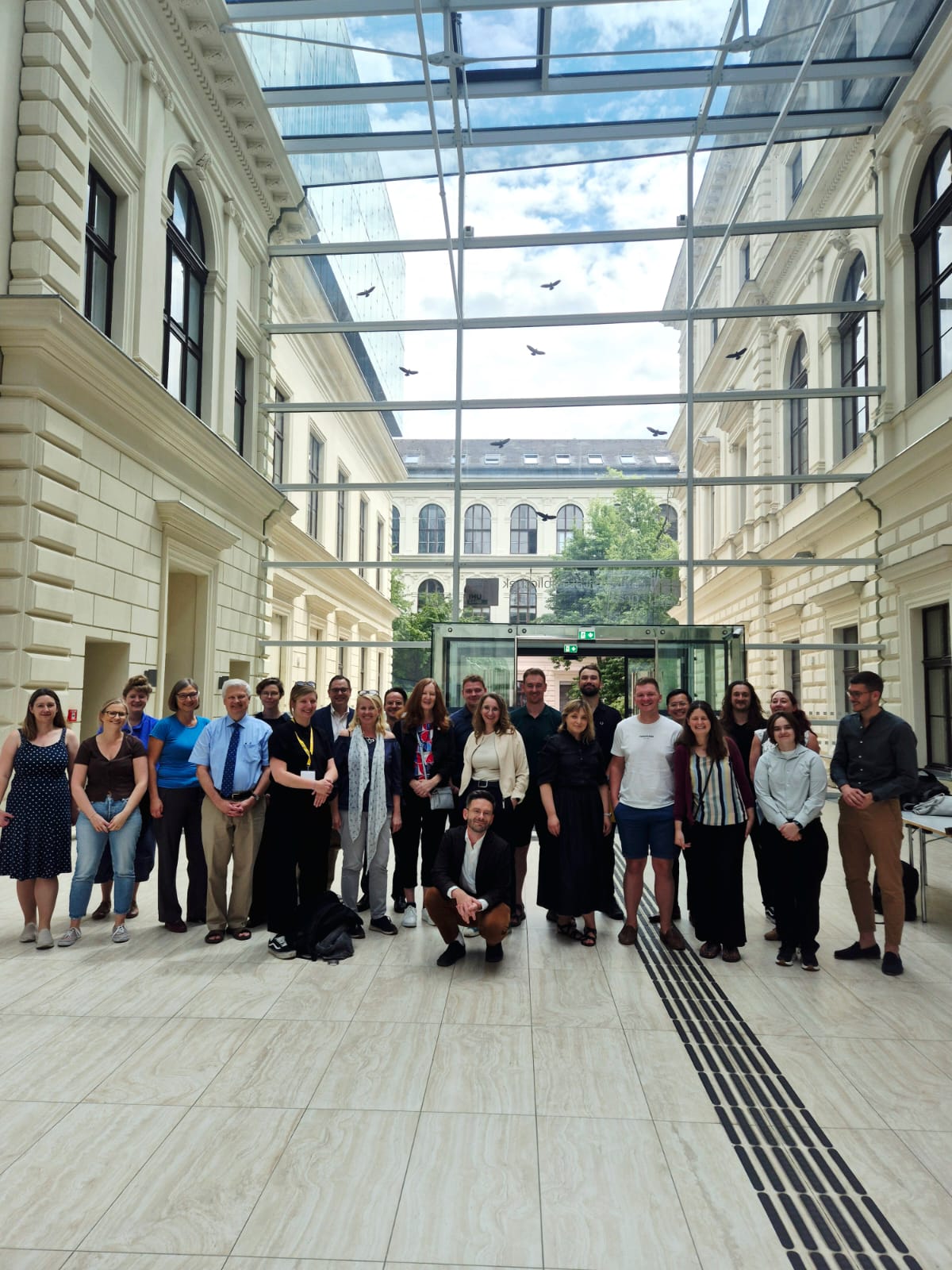
4th International Conference of the Military Welfare History Network 2025

The Military Welfare History Network held its fourth international Conference from July 9th to July 11th, organised by Heidrun Zettelbauer (GRAZ), Viktoria Wind (GRAZ), Sabine Haring-Mosbacher (GRAZ) and Sabine Jesner (VIENNA). The nine panels and two keynotes aimed to open up new perspectives on the historiography of war and welfare. A book presentation and round-table discussion about the forthcoming publication ‘Gendering Vulnerability and Care During the 'Greater War' in Europe, 1912–1923‘ deepened these discussions regarding the First World War. Maren Lorenz (BOCHUM) opened the conference with a keynote speech in which she explored the semantic and epistemic dissonances embedded in the juxtaposition of ‘military’ and ‘care’, positioning them as historically opposed yet intimately entangled within the longue durée of armed conflict. Her analysis of post-Thirty Years’ War autobiographical material illustrated the embeddedness of violence in social structures and the habitual internalisation of cruelty.
The first panel focused on the experiences and coping strategies of care and relief workers. Ingrid Sharp (LEEDS), analysing British humanitarian relief during and after the First World War, identified an ‘emotional regime’ characterised by restraint as well as solidarity networks to alleviate suffering. Corinne Painter (LEEDS) examined the impact of wartime welfare work on German women who, now equipped with organisational experience, became activists during the 1918/19 revolution. Emma Newlands (STRATHCLYDE) concluded the panel with her analysis of the ambiguous status of British Army medics during the Second World War and their relation to hegemonic conceptualisations of masculinity.
Anri Delport (STELLENBOSCH) opened the second panel with her discussion of the experiences of South African ex-servicemen after the First World War, their complicated relationship with duty and ‘South-African’ as a category of identification. Colin D. Moore (HONOLULU) analysed the strategies of the U.S. Department of Veterans Affairs dealing with the AIDS crisis, a ‚quiet‘ approach that Moore described as a strategy of ‚institutional self-preservation‘. Also focusing on the U.S. Army and its discursive strategies, Jana Lipman (TULANE) analysed four rape prevention films from the late 1970s, contextualising them within a decreasing dependence of the army on its female forces.
The material dimensions of care work were at the centre of attention of the third panel. Anna Elisabeth Gehl (BERLIN) analysed writings about sensual experiences by British nurses during the First World War, and shed light on the effects of witnessing extreme violence and strategies to deal with trauma. Sarafina Pagnotta (OTTAWA) explored material traces of historical actors by focusing on soldiers’ art within nurses’ autograph books. Concluding the panel, Chandini Jaswal (PANJAB) focused on the trauma, its embodiment and passing on through generations, suffered by the many women who were abducted during the 1947 partition of colonial India. The next panel offered three case studies on institutional responses to infectious diseases in Early Modernity. Dirk Modler (BOCHUM) directed his attention to the Rhineland during the War of the First Coalition (1792–1797) and contemporary views of the hospital as a site of infection. Geographically shifting further East, Christian Promitzer (GRAZ) focused on the drastic reaction of Habsburg authorities to the plague of 1813–1816. Sabine Jesner (VIENNA) analysed the gendered handling of venereal diseases by the Habsburg welfare state during the 18th century, which changed from moralistic control to a more rationalised care by the end of the century.
Focusing on aspects of knowledge production and rereading sources, Archivist Cécile Chemin (DUBLIN) opened her panel with a presentation about the Military Service Pensions Collection in Ireland, whose materials enable researchers to access individual actors and their international connections. Insights into contemporary critiques of the welfare system were offered by Marie Findeisen’s (FLORENCE) close reading of Emmy Freundlich’s challenges to the idea of warrior homesteads during the First World War. The panel closed with a lecture by Dat Manh Nguyen (AMSTERDAM) on welfare support for Agent Orange victims, as well as the discourses and wound culture surrounding the toxin during the Vietnam War.
In Thursday's last panel, Charles Hewat (SYDNEY) discussed deserted war brides in Australia after the First World War, and concluded that the welfare system positioned women as auxiliaries to male veterans. Focusing on gender relations within institutionalised care, Rosemary Cresswell (OXFORD/STRATHCLYDE) analysed the transformations of the British voluntary aid system between the World Wars, emphasising demographic shifts among the volunteers. Oksana Vynnyk (MAYNOOTH) closed the panel by examining the connections between welfare systems and gender discourses, especially public contestations of female employment, in interwar Poland.
In her keynote speech, Ruth Nattermann (MUNICH/LEIPZIG) reflected on the developments within research regarding humanitarianism. She identified a geographical shift of interest from Central to Southern Europe and the Mediterranean region, as well as a methodological shift, which now puts gender historical questions at the centre of interest. Three case studies illustrated the interconnectedness of humanitarian actors and their very different motivations for humanitarian labour.
Opening the last day of the conference, Louise Earnshaw (LEEDS) explored gendered narratives of hunger and violence by Austrian soldiers during and after the First World War. Daniel Gunz (VIENNA) examined the contested legacy of Victoria Savs, an Austro-Hungarian First World War veteran whose gender nonconformity and war heroism were variously appropriated by interwar and National Socialist narratives. Lastly, based on over 300 interviews with Croatian veterans of the 1990s war, Blanka Matkovic (WARWICK) analysed the ‘aftermath’ of said war, focusing on postwar identity reconstruction and wellbeing.
How war welfare was conceptualised and legitimised in Early Modern times was approached by Matthew Neufeld (SASKATCHEWAN) through the case study of Colonel Bullen Reymes, who was responsible for the wellbeing of prisoners of war captured in the Anglo-Dutch Wars. Martin Kauder (COLOGNE) determined in his lecture on the ‘aftermath’ of the Napoleonic Wars in Württemberg that the accompanying militarisation accelerated the emergence of modern welfare systems. Teresa Petrik (VIENNA) and Julia Heinemann (ANTWERP) approached discourses on who is worthy of state support in their lecture on 18th-century Austria and its state support for invalids.
The final panel examined the complex connections between military and civil structures. Firstly, Anne D. Peiter (LA RÉUNION) used autobiographical material to explore these connections within the context of the genocide in Rwanda. Eliska Bujokova (NEW BRUNSWICK) discussed naval healthcare systems in 18th-century British colonies in the Caribbean, emphasising the role of enslaved people in maintaining naval care infrastructures. The panel concluded with Michael Robinson's (BIRMINGHAM) insights into British veterans who migrated to Australia in the 1930s.
The 4th International Conference of the Military Welfare History Network concluded after three intensive and fruitful days. It became apparent that war welfare history can only be understood as an interconnected history, where cultural norms, institutional structures, and individual actors influence and interact with one another.
Tagungsübersicht
Wed., 9 July
Heidrun Zettelbauer (GRAZ), Joachim Riedl (GRAZ), Emma Lantschner (GRAZ), Sabine Haring-Moosbacher (GRAZ), Sabine Jesner (VIENNA), Viktoria Wind (GRAZ): Welcome Remarks – Introduction
Keynote I, Maren Lorenz (BOCHUM): Beyond the Messiness of War – Conceptional and Terminological Challenges to Historicising Military-Civil Entanglements, Comment: Frithjof Nungesser (GRAZ)
Thur., 10 July
Panel I: Multilayered Dimensions of Caring: Experiences and Coping Strategies of Relief Workers, Chair: Heidrun Zettelbauer (GRAZ)
Ingrid Sharp (LEEDS): The Costs of Caring: Discourses of Burnout and Ill-health among Humanitarian Relief Workers, 1914–1924
Corinne Painter (LEEDS): Healing and Uprising: The Intersection of Welfare Work and Female Activism in Germany 1914–1924
Emma Newlands (STRATHCLYDE): ‘That hinterland between the grim and the absurd’: Experiences of British Army Medics on Active Service, 1939–1945
Panel II: Logics of Military Welfare: Strategies and Ruptures, Chair: Paul Huddie (DUBLIN)
Anri Delport (STELLENBOSCH): Navigating Duty, Citizenship and Social Justice: South African First World War Ex-Servicemen and the Complexities of Military Welfare Provision and Exclusion in a Global Context, 1914–1939
Colin D. Moore (HONOLULU): Service, Stigma, and Survival: The US Veterans Administration’s Response to the AIDS Crisis, 1981–2000
Jana K. Lipman (TULANE): “It doesn’t always happen to someone else”: The US Army’s Sexual Violence Prevention Strategy, 1978–1982
Panel III: Im|Material Dimensions and Bodily Traces: Processing Care Work, Chair: Heike Karge (GRAZ)
Anna Elisabeth Gehl (BERLIN): The Second Battlefield: Female Medical Volunteers and their Fight for the Bodies in their Care
Sarafina Pagnotta (OTTAWA): The Art of Care During Wartime: Bluebirds, Autograph Books and Soldier Art in the First World War
Chandini Jaswal (CHANDIGARH): CALLING ON WARIS SHAH* Contextualising the Silence of Women in Partition through Amrita Pritam’s Oeuvre
Panel IV: Military Medical Welfare in Early Modernity: Infectious Diseases as Catalyst for Public Health Development, Chair: Maren Lorenz (BOCHUM)
Dirk Modler (BOCHUM): Health, Hospitals and Hostilities: Battling Disease during the War of the First Coalition (1792–1797)
Christian Promitzer (GRAZ): Burning Down the House: Protecting the People from the Plague Epidemic of 1813–1816 in the Habsburg Military Border
Sabine Jesner (VIENNA): Habsburg State Welfare and Venereal Diseases in the 18th Century
Book Presentation and Round Table Discussion: Gendering Vulnerability and Care during the ‘Greater War’, 1912–1923. Conversations Across Borders, ed. by Ingrid Sharp and Heidrun Zettelbauer (Palgrave Macmillan 2025)
Panel V: Shifting Perspectives: Re|Reading Sources, Archives and Knowledge Production, Chair: Sabine Haring-Mosbacher (GRAZ)
Cécile Chemin (DUBLIN): From Epicentres to Ripples – Excavating Meanings in the Military Service Pensions Archive (Ireland)
Marie Findeisen (FLORENCE): Emmy Freundlich’s 1916 Challenge to the Idea of Warrior Homesteads
Dat Manh Nguyen (AMSTERDAM): Intergenerational Welfare Support for Agent Orange Victims: Vietnam, the United States, and the Enduring Wound Culture
Panel VI: Gendering Military Welfare Politics: National Dimensions and Differences, Chair: Werner Suppanz (GRAZ)
Charles Hewat (SYDNEY): “No Obligations to Either”. Australian Military Welfare Provision for Deserted War Brides After the First World War
Rosemary Cresswell (OXFORD/STRATHCLYDE): British Voluntary Aid Societies in the Second World War and the Impact of Recruitment Shortages on Military Welfare and Healthcare
Oksana Vynnyk (MAYNOOTH): Constructing War Disability and Gender in Interwar Poland
Keynote II, Ruth Nattermann (MUNICH/LEIPZIG): Rethinking Humanitarianism and Gender
Fr., 11 July
Panel VII: Narrating Violence and Vulnerability: Writing and Transforming Biographies, Chair: Viktoria Wind (GRAZ)
Louise Earnshaw (LEEDS): Negotiating Vulnerabilities: Masculinity, Hunger, and the Boundaries of Violence in the First World War
Daniel Gunz (VIENNA): Queering the “Legacy” of Victoria Savs: Transgression, First World War Heroism, and National Socialist Contradictions
Blanka Matkovic (WARWICK): ‘Warriors in Peace’: Tackling Wellbeing Challenges while Rethinking Identity, Sense of Belonging and a Post-War ‘Normal’ among the Croatian Army Veterans
Panel VIII: Between Functionalisation and Marginalisation: Conceptualizing War Welfare Discourses, Chair: Sabine Jesner (VIENNA)
Matthew Neufeld (SASKATCHEWAN): Caring for the Enemy? Colonel Bullen Reymes and Dutch Prisoners of War in Mid-Seventeenth Century England
Martin Kauder (COLOGNE): Maintaining the Sons of the Fatherland – Governing Poverty in Early 19th Century Württemberg
Teresa Petrik (VIENNA) and Julia Heinemann (ANTWERP): Who is “worthy” of Support? Perspectives of Disability History and Labour History on Invalids, Former Soldiers and their Families in Eighteenth Century Austria
Panel IX: Entangled Structures and Processes: Spaces – Mobilities – Transitions, Chair: Kamil Karczewski (GRAZ)
Anne D. Peiter (LA RÉUNION): The "Civilisation of the Military". Reflections on Communities of Violence between Civilian and Military Actors in the Genocide against the Tutsi of Rwanda (1994)
Eliska Bujokova (NEW BRUNSWICK): Naval Care Provision and Slavery in the Maritimes
Michael Robinson (BIRMINGHAM): ‘Strangers in a Strange Land’: British Veteran Migrants in Australia during the 1930s